The wrong generation?
Why Charities may be chasing the wrong generation
Spend any time in the fundraising sector and it quickly becomes apparent that the search for the next generation of donors has become something of an obsession. Conference programmes are filled with discussions about Gen Z, social media platforms, digital acquisition and the challenge of engaging younger audiences. The assumption underpinning much of this conversation is that the long-term health of the charity sector depends on its ability to recruit younger supporters before someone else does.
There is, of course, some truth in this. Any organisation hoping to thrive in the coming decades must think carefully about how it engages future generations. Yet there is a risk that, in looking so intently towards the future, charities are overlooking one of the most significant fundraising opportunities available today.
The latest discussions around individual giving and legacy fundraising reveal an interesting contradiction. On the one hand, charities are increasingly concerned about declining donor participation and the challenge of recruiting new supporters. On the other, legacy income continues to perform remarkably well, underpinned by an ageing population and what is expected to be the largest intergenerational transfer of wealth in British history.
What is striking is how rarely these two conversations are connected.
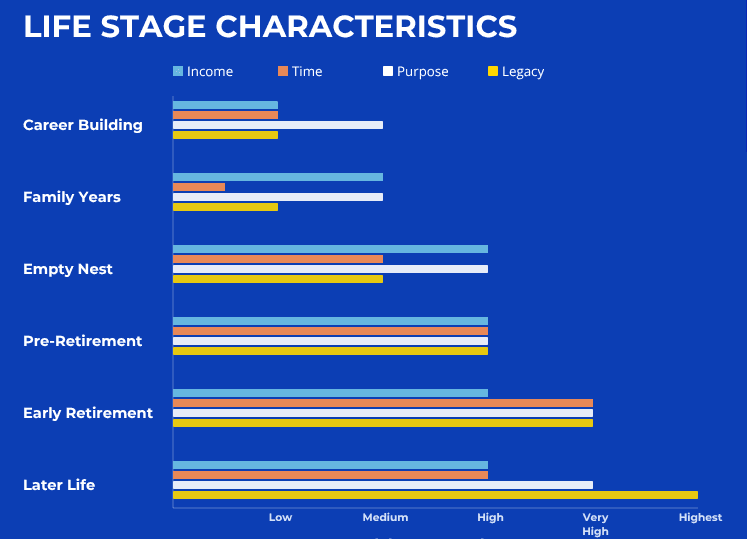
Legacy gifts do not emerge spontaneously at the end of someone’s life. In most cases, they represent the culmination of years, and often decades, of engagement with an organisation. They are the product of trust, affinity and a sense of shared purpose built over time. Yet many charities devote considerable resources to understanding how to engage younger audiences while investing comparatively little effort in understanding the millions of people moving through later-life transitions that often make individuals more receptive to charitable engagement.
Retirement, in particular, remains curiously underexplored as a fundraising opportunity. Each year, around a million people leave the workforce in the UK. For many, retirement brings welcome freedom, but it can also prompt questions about identity, purpose, contribution and belonging. Children may have left home, careers may no longer define daily life, and social networks often begin to change. These are precisely the moments at which people reassess what matters to them and where they want to invest their time, energy and resources.
Yet fundraising strategies frequently remain focused on generational labels rather than life-stage dynamics.
This matters because age is often a poor predictor of charitable behaviour. A recently retired professional with strong community ties, available time and a desire to contribute may represent a far greater opportunity than a much younger individual whose financial circumstances make regular giving difficult, however passionate they may be about a cause. The question is not whether younger people care. Most evidence suggests they do. The question is whether charities have become so preoccupied with identifying future donors that they have neglected some of the people most likely to become supporters in the present.
The organisations that succeed in the coming decade may therefore be those that stop thinking primarily in terms of generations and start thinking more carefully about life stages, motivations and behaviours. Rather than asking how to attract more Gen Z supporters, they may find greater value in understanding who is approaching retirement, who is seeking connection after major life changes, who is becoming more involved in their local community and who is most likely to deepen their relationship with a cause over time.
Answering those questions requires more than instinct. It requires robust audience insight, thoughtful segmentation and a much deeper understanding of supporter behaviour than many organisations currently possess. The charities that make the best use of their data will be better placed to identify overlooked audiences, recognise emerging opportunities and invest their limited resources where they are most likely to have an impact.
For all the discussion about the next generation of donors, the more pressing question may be whether charities truly understand the audiences already in front of them. The future of fundraising will not be determined solely by who comes next. It may depend just as much on whether organisations can recognise the opportunities they have been overlooking all along.